


Running used bike listing optimization across marketplaces while keeping margin intact feels impossible when you're juggling your shop floor, Craigslist, Facebook Marketplace, eBay, Pinkbike, and maybe a few local platforms. Each channel has different fees, different buyer behavior, and different pricing expectations. Meanwhile, that $800 gravel bike has been sitting for 47 days and you're wondering whether to drop the price, move it to another platform, or just accept you overpaid on the trade-in.
Most shops handle this reactively. A bike sits too long, someone drops the price. It still doesn't sell, so it moves to Facebook. Eventually it sells for way less than planned — or becomes that permanent fixture in the corner everyone walks past.
The real problem runs deeper than picking the wrong platform. Without clear rules for where to list what, when to reroute inventory between channels, and how to adjust pricing based on time and margin targets, you end up with scattered inventory, inconsistent pricing, and margin erosion that quietly compounds over months.
The Channel Selection Problem Nobody Talks About
Every marketplace attracts different buyers with different expectations. Local Facebook groups want deals on entry-level bikes. eBay buyers will pay a premium for specific vintage models but expect detailed photos and specs. Craigslist moves bikes quickly but attracts lowballers. Pinkbike pulls serious mountain bikers who know exactly what components are worth.
Yet most shops list everything everywhere — or worse, pick channels based on whoever happens to be doing the listing that day. This scattershot approach creates problems that stack up fast.
First, you waste time building redundant listings. That Trek hybrid needs different photos for Instagram than eBay. The description that works on Craigslist won't fly on Pinkbike. Staff ends up burning 30-40 minutes per bike just managing platform logistics.
Second, pricing gets messy. The same bike might be listed at $650 on Facebook, $700 on your website, and $675 on Craigslist because different people posted at different times. Buyers notice this. They screenshot your lower price and demand a match. Or they just buy from whichever channel is cheapest, which trains them to always hunt for your mistakes.
Third, inventory tracking falls apart. That Specialized sold on eBay yesterday but nobody updated Facebook. Now you're dealing with a buyer who drove 40 minutes to see a bike that's already gone. These situations damage your reputation across all channels, not just where the mistake happened.
The coordination overhead alone kills productivity. But the real damage shows up in margin when there are no clear rules for price adjustments based on days listed and channel performance.
Building Your Channel Decision Matrix
A working channel matrix starts with understanding what actually sells where. Not gut feelings — patterns across dozens of sales.
Never miss a sale or service appointment again.
Bicyclly helps you manage every sale, repair, and booking with ease and accuracy.
- Unified inventory and sales tracking
- Automated customer notifications
- Service appointment scheduling
No credit card required
Price bands matter more than most shops realize. Sub-$300 bikes move fast on Facebook Marketplace and Craigslist. The $300-$800 range works across most channels but requires different positioning. Above $800, you need platforms where buyers expect to spend real money — eBay, Pinkbike, dedicated cycling forums.
Bike categories determine buyer pools. Kids' bikes and basic hybrids do great on local Facebook groups where parents shop. Mountain bikes need enthusiast platforms. Road bikes split between serious cyclists on forums and casual riders on general marketplaces. E-bikes have carved out their own category with specific platforms gaining traction.
Condition and age affect channel tolerance. Near-new bikes with warranty can command premium prices on your website or eBay. Older but well-maintained bikes work on enthusiast forums where buyers understand the value. Beat-up project bikes might only move on Craigslist where price is all that matters.
Here's what an operational matrix actually looks like:
| Bike Type | Primary Channel | Secondary Channel | Never List On | Days to Secondary | Max Days Listed |
|---|---|---|---|---|---|
| Kids (<$300) | Facebook Local | Craigslist | eBay | 14 days | 45 days |
| Entry Hybrid ($300-500) | Facebook/Craigslist | Shop Website | Pinkbike | 21 days | 60 days |
| Mid Mountain ($500-1200) | Pinkbike | eBay | Craigslist | 30 days | 75 days |
| High-End Road (>$1200) | eBay/Forums | Shop Website | 45 days | 90 days | |
| E-Bikes | Dedicated E-Bike Sites | eBay | Craigslist | 30 days | 60 days |
| Vintage/Collectible | eBay | Specialty Forums | 60 days | 120 days |
The "Days to Secondary" column triggers consideration for a channel switch. The "Max Days Listed" prevents endless price drops on bikes that won't sell at any reasonable margin. Both columns matter as much as the platform choices themselves.
Time-Based Repricing That Protects Margin
The biggest margin killer in used bike sales is panic pricing. A bike sits for three weeks, someone drops it 20%. Two more weeks, another drop. Eventually you're selling below acquisition cost plus reconditioning — and nobody tracked how it happened.
Smart repricing starts with knowing your true floor price. For each bike, calculate:
-
Acquisition cost (what you paid or trade-in value)
-
Reconditioning costs (parts, labor at shop rate)
-
Channel fees (eBay 12.9%, Facebook 5%, etc.)
-
Minimum acceptable margin (usually 25-35% for used)
This gives you a hard floor below which you won't sell. Period.
Set your floor price in your POS before creating listings so repricing rules never push below it.
Days 1-14: Full asking price Hold firm. Early inquiries often lowball. Serious buyers need time to find your listing. This period tests market response without sacrificing anything.
Days 15-30: First adjustment (5-7%) A small drop signals flexibility without desperation. It often triggers fence-sitters who were watching. Keep the reduction modest — you're testing price sensitivity, not liquidating.
Days 31-45: Channel evaluation Before dropping the price further, consider a channel switch. That carbon road bike might be on the wrong platform, not overpriced. Moving from Craigslist to a cycling forum can unlock an entirely different buyer pool.
Days 46-60: Second adjustment (10-12% cumulative) A larger drop, but still protecting core margin. At this point you're competing with newer listings. The bike needs to stand out on price or it gets buried in search results.
Days 61-75: Aggressive repricing (15-20% cumulative) Now you're actively trying to move it. But never break your floor price. If you're approaching that floor, something else is wrong — wrong season, wrong market, needs different reconditioning.
Days 76+: Remove and reassess Pull the listing. Sometimes bikes need to disappear and return fresh. Bundle with accessories, wait for a better season, or accept it's a different kind of problem. Endless price drops just train buyers to wait you out.
Managing Multi-Channel Inventory Without Chaos
The operational mess starts when the same bike exists on four platforms with different prices and descriptions. Most shops try to solve this with spreadsheets. That spreadsheet falls behind reality within days.
Single source of truth Pick one system — your POS, inventory software, or even a well-maintained spreadsheet — where the current price and status live. Everything else pulls from this. Prices change here first, then cascade to channels.
Channel-specific SKUs Append channel codes to your internal SKUs. That Trek becomes TREK-424-FB on Facebook, TREK-424-EB on eBay. Now you can track which channel actually drives sales, not just which platform the buyer mentions when they call.
Batch pricing updates Don't adjust prices randomly throughout the day. Pick a schedule — Monday and Thursday mornings, for example. Review all aged inventory, apply your repricing rules, update your source system, then push changes to all channels at once. This prevents the chaos of different prices showing on different days.
Clear ownership Someone needs to own multi-channel listing management. Not "whoever has time." One person — or AI-powered operational software — should track what's listed where, what needs repricing, and what should move channels. Split responsibility means dropped balls and missed opportunities.
For shops doing more than 10-15 used bikes a month, manual tracking becomes genuinely painful. The coordination overhead eats into margins as much as poor pricing does. AI automation changes this by syncing inventory across channels automatically, applying repricing rules based on days listed, and flagging bikes that need channel switches or removal — without someone having to manually check everything.
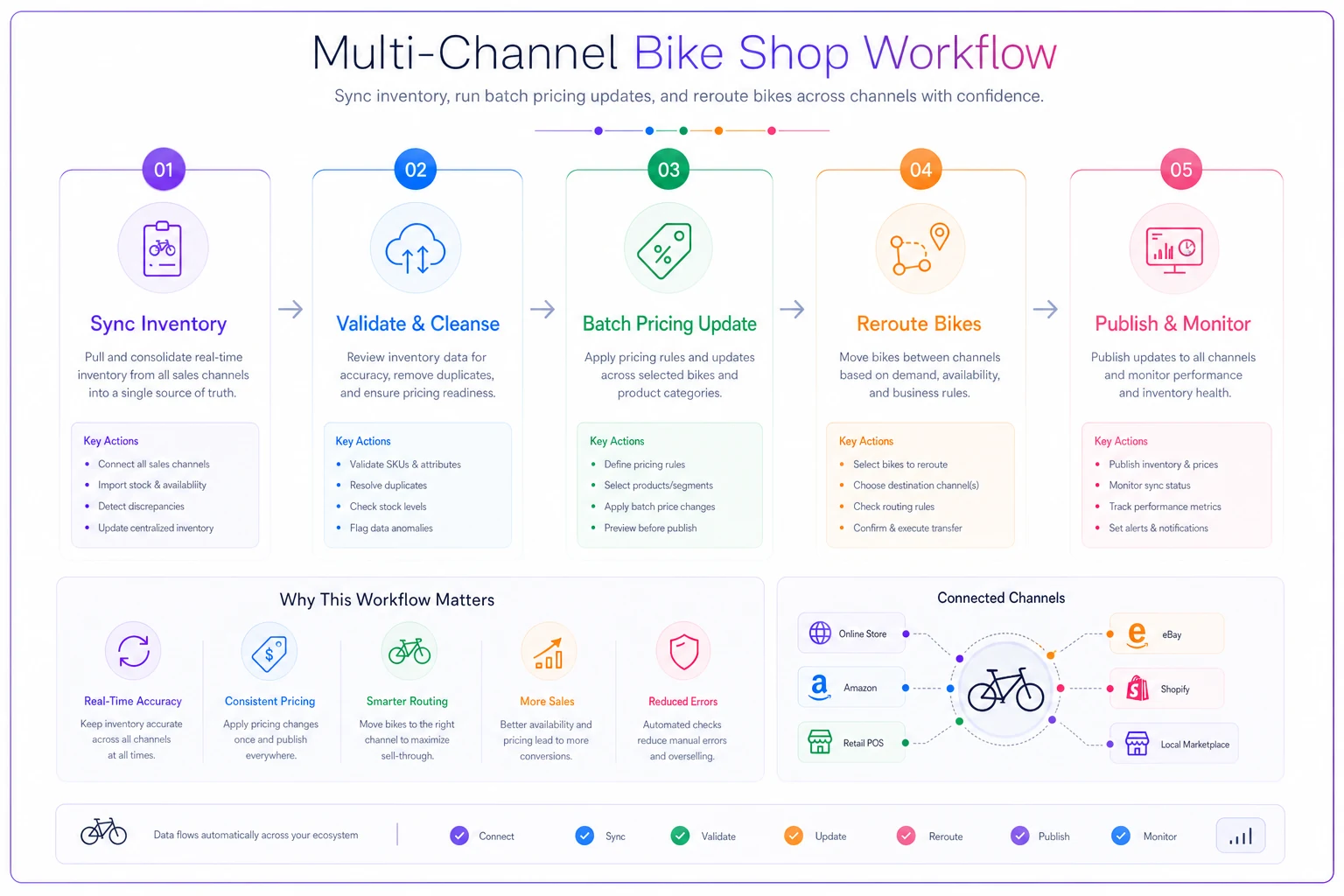
This illustrates the recommended workflow for syncing inventory, scheduling batch price updates, and routing bikes between channels.
Bundle Strategies and Margin Recovery
When a bike approaches its floor price without selling, most shops either take the loss or let it collect dust. There's a third option that preserves margin while moving inventory: strategic bundling.
Not every bundle makes sense. Throwing random accessories at a slow-moving bike just increases your cost basis. But targeted bundles based on buyer behavior can unlock sales at acceptable margins.
The New Rider Bundle That entry-level hybrid sitting for 60 days? Bundle with a helmet, lock, and basic lights. Your cost might increase $40 but you can raise the price $75-100. New riders prefer one-stop shopping over hunting for accessories separately.
The Upgrade Bundle Mid-tier mountain bike not moving? Add those take-off pedals and grips from recent upgrades. Costs you nothing but inventory space, and adds perceived value worth $50-75 to buyers who would've bought those parts anyway.
The Service Bundle Include a tune-up package or first year of basic adjustments free. Costs marginal labor time but can justify holding firm on price for bikes approaching repricing triggers.
The key: bundles have to make logical sense to buyers, not just clear your shelves. A road bike with mountain bike accessories won't sell. A gravel bike with a frame bag and tool kit? That's a ready-to-ride adventure package worth paying for.
Seasonal Patterns and Platform Dynamics
Used bike listing optimization shifts dramatically with seasons, but not always how shops expect. The obvious pattern — more sales in spring and summer — only tells part of the story.
Platform behavior changes seasonally too. Craigslist floods with inventory in October as casual riders clear garage space. Prices crater. Specialty forums stay steady because serious riders buy year-round. eBay actually peaks in winter for vintage and project bikes — buyers have time to restore during the off-season.
September-November: Push inventory hard on local platforms before the flood. Accept slightly lower margins to avoid competing with massive October supply. Move collectibles to eBay where winter buyers are starting to browse.
December-February: Focus on enthusiast platforms where serious riders shop regardless of weather. This is also the best time to acquire inventory cheap from sellers who need holiday cash.
March-May: Premium selling season but also maximum competition. Differentiate with bundles, service packages, and detailed listings rather than competing purely on price.
June-August: Comfort and hybrid bikes suddenly outsell performance models. Adjust inventory mix and channel focus to match a buyer pool that looks different from the rest of the year.
When to Exit Instead of Repricing
Some bikes will never sell at acceptable margins no matter how long you list them or which platforms you try. Recognizing these early saves months of wasted effort and floor space.
Warning signs a bike won't sell profitably:
-
Obscure brand with no search demand
-
Outdated technology buyers actively avoid (8-speed road bikes when everyone wants 11)
-
Visible damage that photographs poorly
-
Sizes at the extremes (under 48cm or over 62cm road bikes)
-
Previous-generation e-bikes with battery concerns
Parts harvest: Strip valuable components for shop use or separate sale. That old mountain bike might have a wheelset worth more than the complete bike.
Donation: Take the tax write-off instead of the floor space. Some shops partner with local nonprofits for regular donation pickups.
Wholesale liquidation: Sell in bulk to used bike dealers or export buyers. You'll take a hit on margin but free up capital and space for profitable inventory.
Warranty/insurance claims: Some trade-ins have hidden warranty coverage or recall replacements. That Trek with the recalled fork might get you a new fork worth more than the bike itself.
Building Your Operational Playbook
A channel matrix and repricing rules only work if your team actually follows them. That requires documentation that's accessible and actionable, not a Google Doc nobody opens.
Your playbook needs three components:
The decision tree: A simple flowchart for which channel to use. Bike category → price range → condition = recommended platform. Make it visual. Post it where listings get created.
The repricing calendar: Clear triggers for when to check prices and how much to adjust. Not suggestions — rules. "Day 30: Drop 7% or switch channels." Remove the individual judgment that leads to inconsistent pricing.
The exit criteria: When to stop trying to sell. "Day 90 at floor price = harvest for parts." This prevents bikes from becoming permanent fixtures that tie up capital and space indefinitely.
Train your team on why these rules exist. They need to understand margin protection, not just follow commands. When someone suggests dropping a price 30% on day 10, they should understand why that breaks the whole system.
Stop Losing Margin on Trade-Ins: Valuation, Reconditioning, and Resale Rules for Shops covers the acquisition side of this — getting the right bikes at the right prices to begin with. But even perfect acquisition needs solid channel and pricing execution to actually deliver margin.
Tracking What Actually Works
Most shops never analyze which channels and pricing strategies actually drive profitable sales. They know eBay takes huge fees but don't track whether eBay buyers pay enough of a premium to offset them. They assume Facebook is free but don't account for time spent dealing with no-shows and lowballers.
Track these metrics monthly:
-
Sale price vs. list price by channel
-
Days to sale by channel and category
-
Total labor hours per sale by channel
-
Net margin after all fees and labor
You'll find surprising patterns. Maybe Pinkbike takes longer but delivers 20% higher margins. Maybe Craigslist seems efficient until you factor in no-shows and suddenly your effective hourly rate tanks. Maybe your website sells almost nothing, but the few sales it does generate are full price with zero fees.
Use actual data to refine your matrix. If road bikes never sell on Facebook despite 20 listings, stop wasting time there. If vintage BMX bikes consistently exceed price targets on eBay, expand that category.
The Technology Stack for Multi-Channel Management
Managing used bike listing optimization manually works until you have roughly 20 active listings. Beyond that, the coordination overhead starts crushing productivity. Excel breaks down. Messages get missed. Pricing inconsistencies multiply.
Inventory syncing: When a bike sells on one platform, it should automatically mark as sold everywhere. This requires either multi-channel listing software or AI-powered operational software that connects your platforms.
Automated repricing: Your rules should execute automatically. Day 30 arrives, prices drop 7% across all channels without manual intervention. Consistency improves and hours get saved weekly.
Performance dashboards: See which channels actually make money, not just move bikes. Include labor time, not just platform fees. Track margin trends so you can spot problems before they compound.
Template management: Store proven listing templates by bike category. New listings pull the right template, add specific details, and post to appropriate channels. Stop rewriting the same descriptions over and over.
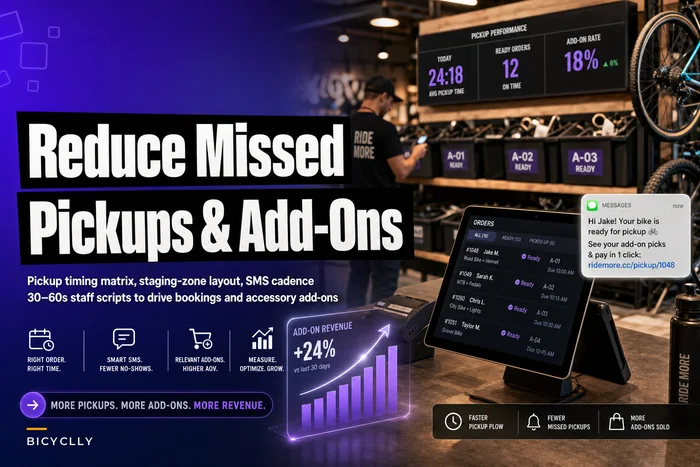
Reduce Missed Pickups and Increase Add-Ons: A Click-and-Collect Pickup Workflow for Bike Shops covers similar coordination challenges for online sales and pickups. The same operational discipline applies to managing multi-channel listings.
The Margin Protection Mindset
The most important shift isn't technical — it's how you think about used bikes. Stop treating them as something to "get rid of" and start treating them as a profit center that requires operational discipline.
Every arbitrary price drop, every bike sold below floor price, every hour spent reposting the same bike to the same platforms — these aren't isolated incidents. They're systematic failures that add up to thousands of dollars in lost margin annually.
A proper channel strategy and repricing discipline can increase used bike margins by 10-15% while actually reducing the time spent managing listings. That's pure bottom-line improvement without selling a single additional bike.
The shops doing well with used bike sales aren't the ones with the best inventory or the most platform presence. They're the ones with clear rules, consistent execution, and the discipline to hold to their system even when someone offers $50 below floor price and swears they have cash today.
Your used bike operation should contribute meaningfully to shop profit, not just clear floor space. With the right channel matrix, repricing rules, and operational discipline, it will.
Ready to revolutionize your bike shop operations?
Join hundreds of bike shops using Bicyclly to save time, increase revenue, and deliver exceptional customer service.